← All styles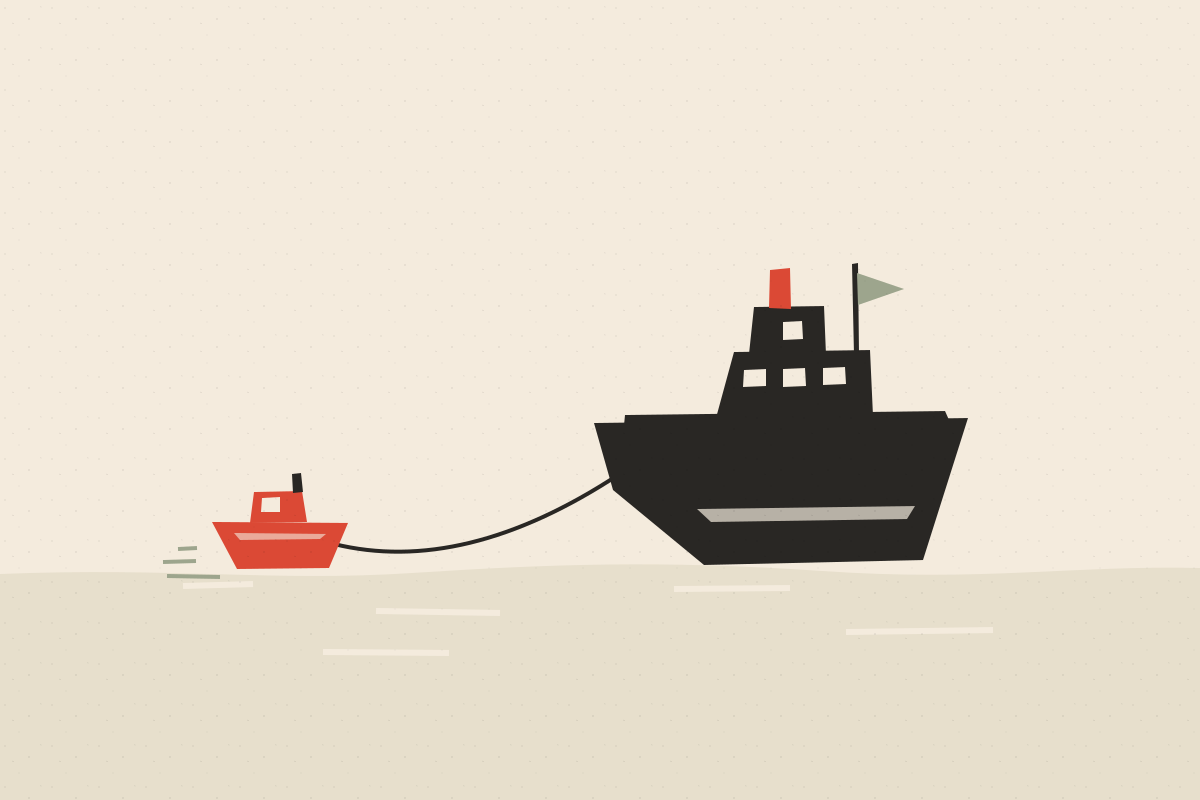
The visual recipe
Paper collage · Draft style · v0.1
Download DESIGN.mdPaper Cut Editorial
Tactile paper shapes, generous space, and a single vermilion detail. A thoughtful, lightly playful direction for explaining complex ideas.
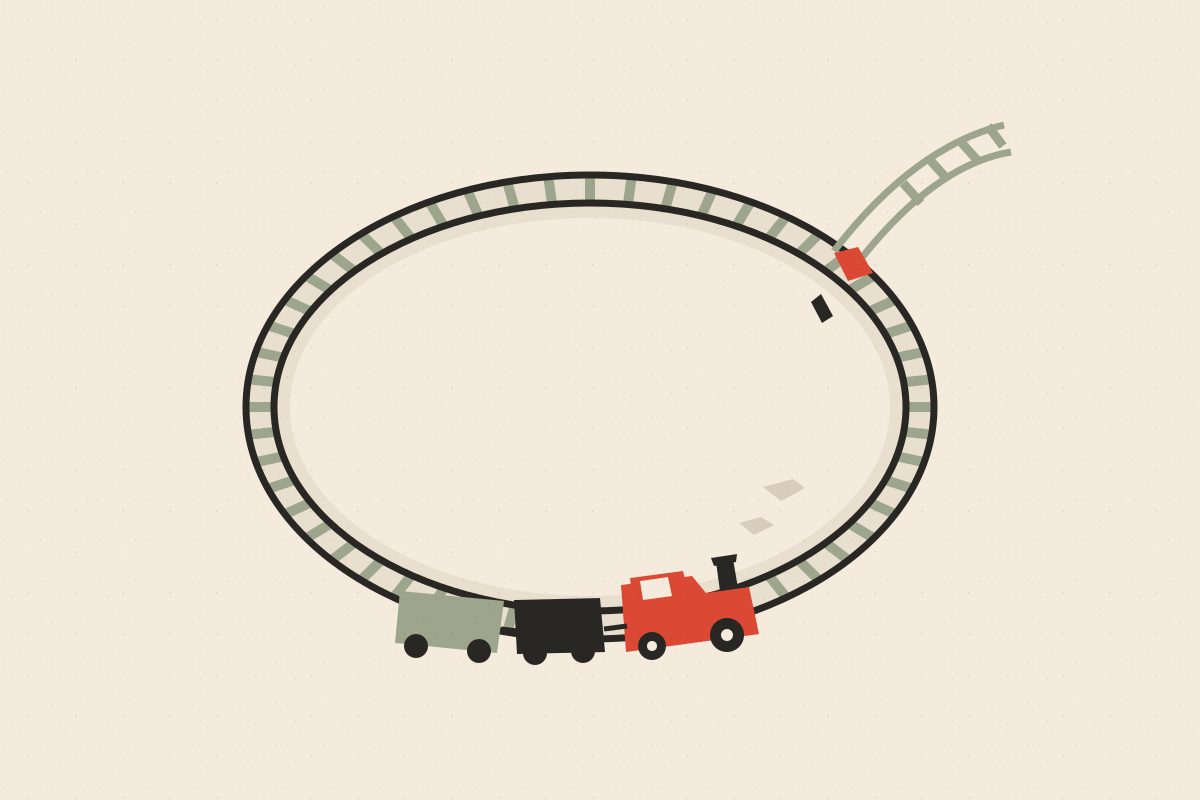
Original concept illustration · Small teams, big moves
Visual character
Tactile editorial collage made from simple matte paper shapes. Slightly irregular cut edges and subtle grain soften clear silhouettes. The tone is thoughtful and lightly playful.
Invariants
- One dominant metaphor, at most two supporting objects.
- Flat paper planes with restrained overlap; shallow contact shadows only.
- Clear silhouettes and sparse detail readable at thumbnail size.
- Visible but quiet paper texture; no glossy or photorealistic objects.
Palette
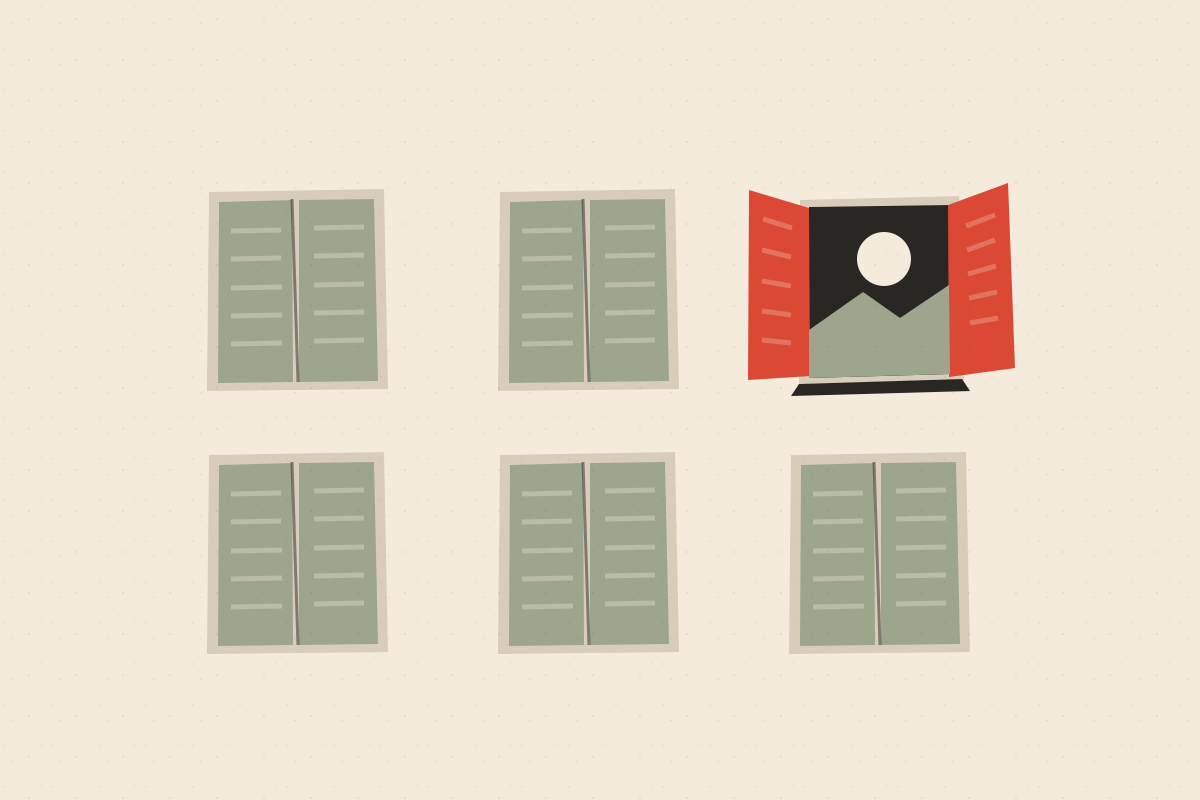
Default: warm ivory #F4EBDD background, charcoal #292724 main forms, vermilion #DB4935 focal accent. A muted supporting paper color is optional.
A supplied brand palette can replace these colors while preserving a light ground, dark structural forms, and a single stronger accent. Hex values express intended colors, not a promise of exact generated pixels.
Composition and format
Place the principal object off-center with generous empty space. Use scale contrast when it supports the concept. Default to wide 16:9. Recompose for square format rather than relying on a crop that cuts the metaphor apart.
If headline space is requested, keep the selected side mostly empty and put the focal object on the opposite side.
Text
No lettering or logos by default. Reserve space for subsequent typesetting when requested; include exact headline copy separately in the brief.
Subject adaptation
Replace objects and metaphor to suit the article. Preserve paper material, edge language, limited palette, and sparse composition. Do not reuse a train or boat merely because an example contains one.
Avoid
Deep 3D perspective, glossy materials, realistic faces, dense scenery, tiny labels, decorative symbols unrelated to the thesis, and multiple competing focal objects.
Agent procedure
Confirm the concept; select one silhouette-based scene; apply any brand override; specify focal accent and headline space; provide the brief with the draft status. Use actual example assets only when available.
Prompt skeleton
Create an editorial paper collage illustrating [concept]. Depict [main subject] with [supporting element]. Use matte cut-paper shapes, slightly irregular edges, subtle grain, and restrained overlaps. Apply [palette roles], placing the focal accent on [meaningful detail]. Compose for [format] with [empty-space requirement]. No lettering. Avoid glossy surfaces, deep 3D, and detailed scenery.
Review
The concept is recognizable; paper texture stays matte; the accent directs attention; the silhouette reads small; requested headline space is clear.
Same direction, different ideas
Explore all covers →See the possibilities.
Ready to bring along
The DESIGN.md
DESIGN.md v0.1View source +
# Paper Cut Editorial

- ID: paper-cut-editorial
- Version: 0.1
- Status: draft — no generation validation yet
- Provenance: original proposed art direction, not an extracted brand guide
- Evidence: [test plan](EXAMPLES.md)

## Visual character

Tactile editorial collage made from simple matte paper shapes. Slightly irregular cut edges and subtle grain soften clear silhouettes. The tone is thoughtful and lightly playful.

## Invariants

- One dominant metaphor, at most two supporting objects.
- Flat paper planes with restrained overlap; shallow contact shadows only.
- Clear silhouettes and sparse detail readable at thumbnail size.
- Visible but quiet paper texture; no glossy or photorealistic objects.

## Palette

Default: warm ivory #F4EBDD background, charcoal #292724 main forms, vermilion #DB4935 focal accent. A muted supporting paper color is optional.

A supplied brand palette can replace these colors while preserving a light ground, dark structural forms, and a single stronger accent. Hex values express intended colors, not a promise of exact generated pixels.

## Composition and format

Place the principal object off-center with generous empty space. Use scale contrast when it supports the concept. Default to wide 16:9. Recompose for square format rather than relying on a crop that cuts the metaphor apart.

If headline space is requested, keep the selected side mostly empty and put the focal object on the opposite side.

## Text

No lettering or logos by default. Reserve space for subsequent typesetting when requested; include exact headline copy separately in the brief.

## Subject adaptation

Replace objects and metaphor to suit the article. Preserve paper material, edge language, limited palette, and sparse composition. Do not reuse a train or boat merely because an example contains one.

## Avoid

Deep 3D perspective, glossy materials, realistic faces, dense scenery, tiny labels, decorative symbols unrelated to the thesis, and multiple competing focal objects.

## Agent procedure

Confirm the concept; select one silhouette-based scene; apply any brand override; specify focal accent and headline space; provide the brief with the draft status. Use actual example assets only when available.

## Prompt skeleton

Create an editorial paper collage illustrating [concept]. Depict [main subject] with [supporting element]. Use matte cut-paper shapes, slightly irregular edges, subtle grain, and restrained overlaps. Apply [palette roles], placing the focal accent on [meaningful detail]. Compose for [format] with [empty-space requirement]. No lettering. Avoid glossy surfaces, deep 3D, and detailed scenery.

## Review

The concept is recognizable; paper texture stays matte; the accent directs attention; the silhouette reads small; requested headline space is clear.